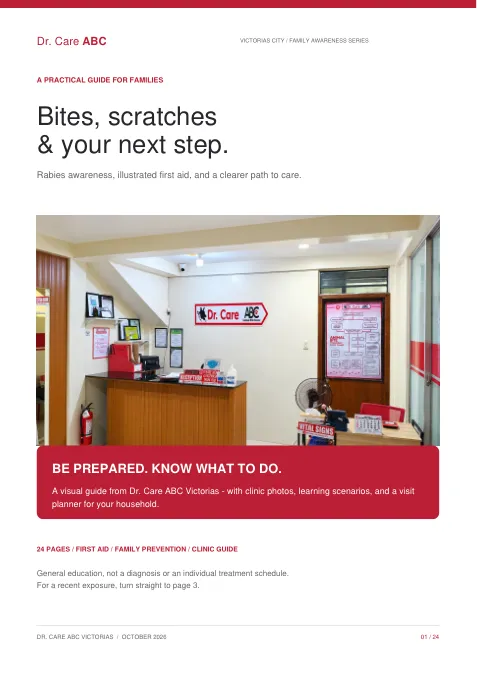
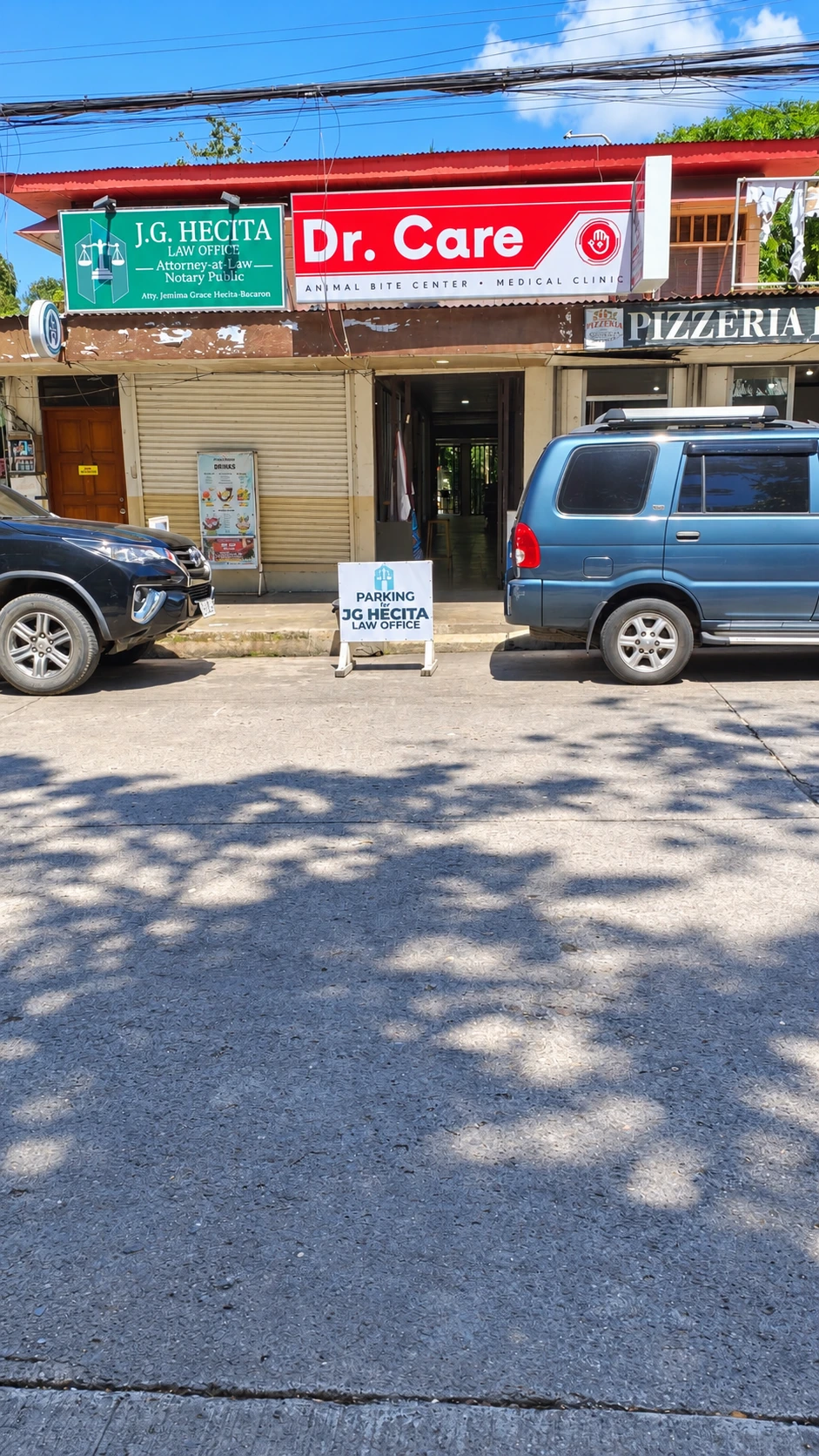
Caption-led photo video with gentle motion. No audio. General education; treatment depends on clinical assessment.
Read the video transcript and sources
Dr. Care ABC Victorias
Animal Bite Center & Medical Clinic Care for you. Awareness for your family.
Start with the care you need.
Animal-bite assessment and wound care Rabies vaccination and ERIG, when indicated Tetanus-related care, other vaccinations, and medical consultations Call to confirm stock, fees, and doctor schedules.
A treatment plan for your exposure.
The team reviews what happened, your wound, and your vaccination history. Ask which treatment is needed, what it costs, and when to return.
Wash. Seek care. Follow the plan.
1 Wash with soap and running water for at least 15 minutes. 2 Seek prompt assessment at an available ABC or emergency department. 3 Follow the prescribed treatment and return dates.
Prevent rabies before symptoms.
Appropriate post-exposure care can prevent rabies. Care may include wound cleaning, vaccine, and immunoglobulin when indicated. Do not wait for symptoms or an online reply.
Know the possible side effects.
Soreness, redness, swelling, headache, or nausea can happen after rabies vaccination. Severe allergic reactions are rare. Trouble breathing or face/throat swelling needs emergency care. Tell the team about prior vaccine reactions.
Bring your records. Ask your questions.
Bring vaccination cards and previous treatment notes if available. Visits may involve fees, waiting, and return trips. Ask about costs and schedules. Do not delay urgent care while searching for records.
Vaccinate pets. Prevent bites.
Keep pets’ rabies vaccination up to date through a veterinarian or local animal-vaccination program. Responsible pet care and bite prevention help protect the community.
Help family and neighbors act early.
Encourage prompt assessment after a bite, scratch, or possible rabies exposure. Teach children safe behavior around animals and to tell an adult immediately after an injury. Share facts and help others reach care.
Handle animals regularly? Ask us.
People at higher exposure risk may need pre-exposure rabies vaccination. Ask for a risk assessment based on your work and activities. Owning or touching a pet does not automatically mean you need human rabies vaccination.
Vaccinated before? Still seek assessment.
Preventive vaccination does not replace care after a possible exposure. Tell the clinician when you were vaccinated and bring your records. Your clinical team decides the appropriate next steps.
Let’s care for Victorias together.
+63 956 923 0286 | etrumpas@yahoo.com Balai Letecia Bldg., Montinola St., Brgy. 4, Victorias City Daily, 9 AM–6 PM. Call to confirm availability. Get the free guide in English or Ilonggo.
Medical references: WHO: Rabies and CDC: Rabies Vaccine Information Statement. Prepared 20 October 2026. Service availability and individual treatment are confirmed by the clinic.